
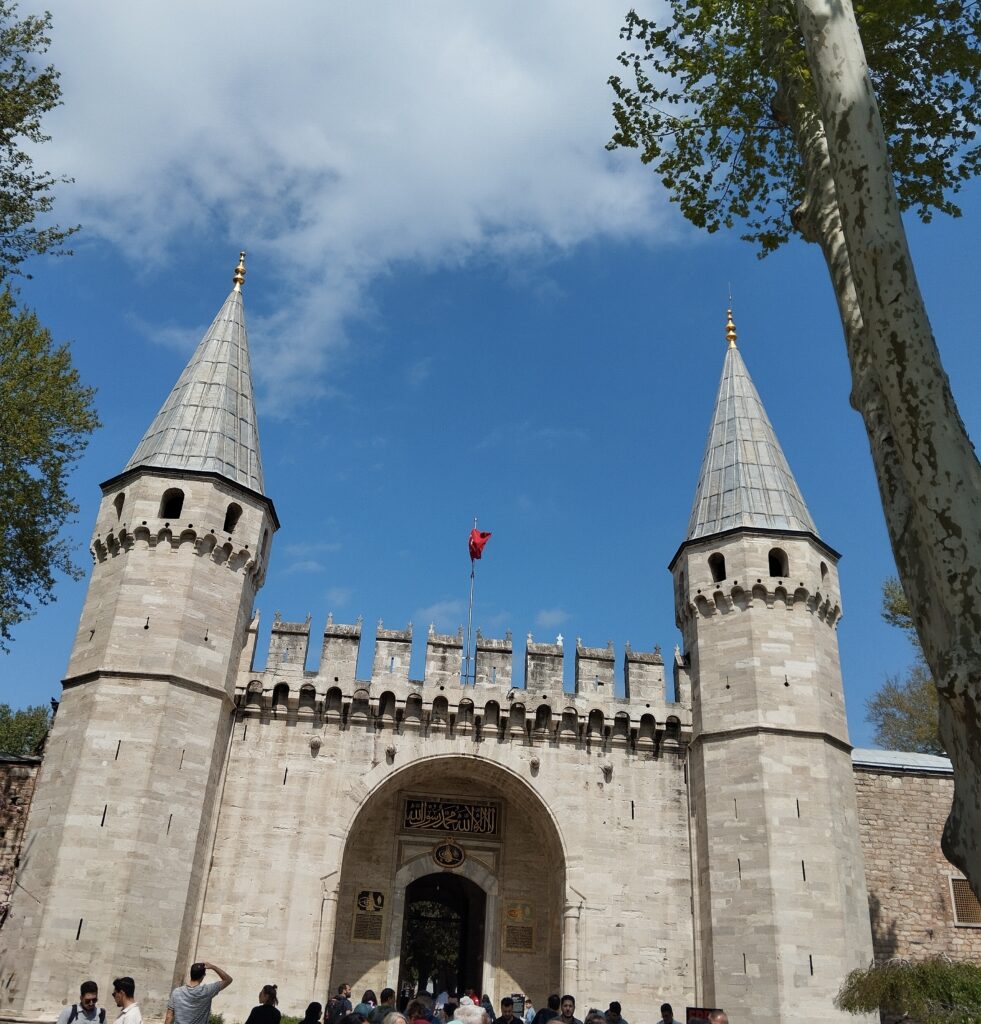
Topkapi Palace is one of the most iconic historical landmarks in Istanbul and a symbol of the power, culture, and elegance of the Ottoman Empire. For nearly 400 years, this magnificent palace served as the administrative center, royal residence, and ceremonial heart of the empire.
Located between the Golden Horn, Bosphorus, and Sea of Marmara, Topkapi Palace offers not only a journey through history but also breathtaking views of Istanbul’s skyline.
A Brief History of Topkapi Palace
Topkapi Palace was commissioned by Sultan Mehmed II (Mehmed the Conqueror) shortly after the conquest of Constantinople in 1453. Construction began in 1460 and continued over several centuries as each sultan added new sections, courtyards, and pavilions.
Unlike European palaces, Topkapi was designed as a complex of courtyards and separate buildings, reflecting the Ottoman understanding of privacy, hierarchy, and state power.
The Four Courtyards of Topkapi Palace
First Courtyard – The Imperial Gate
This outer courtyard was open to the public and housed service buildings such as bakeries, hospitals, and guards’ quarters. It marks the transition from the city to the imperial world.
Second Courtyard – The Administrative Heart
Passing through the Gate of Salutation, visitors enter the second courtyard where state affairs were conducted. Here you’ll find:
- The Imperial Council (Divan)
- The Palace Kitchens, once feeding thousands daily
- Access to the inner palace areas
Third Courtyard – The Inner Palace
This was the private domain of the sultan and his closest circle. Highlights include:
- Audience Chamber
- Enderun School
- Sacred Relics Chamber, displaying items believed to belong to the Prophet Muhammad
Fourth Courtyard – Gardens & Pavilions
The most peaceful section of the palace, featuring terraces, gardens, and pavilions with panoramic views of the Bosphorus. A perfect place to reflect and take photos.
The Harem: A Palace Within a Palace
One of the most fascinating sections is the Harem, home to the sultan’s family, concubines, and queen mother (Valide Sultan). Contrary to myths, the Harem was a strictly organized social and political institution, featuring:
- Over 300 rooms
- Intricate Iznik tiles
- Lavish courtyards and private chambers
Treasures & Collections
Topkapi Palace houses one of the world’s most important imperial collections:
- Ottoman sultans’ jeweled swords and thrones
- The famous Topkapi Dagger
- Ceremonial kaftans
- Ancient manuscripts and calligraphy
Each artifact reflects the wealth and craftsmanship of the Ottoman era.
Why Visit Topkapi Palace?
✔ A UNESCO World Heritage Site
✔ A must-see for history lovers
✔ Incredible architecture and gardens
✔ Stunning views of the Bosphorus
✔ Deep insight into Ottoman court life
Visitor Information
- Location: Sultanahmet, Istanbul
- Best Time to Visit: Morning hours to avoid crowds
- Tip: Allocate at least 2–3 hours for a full visit
Conclusion
Topkapi Palace is more than just a museum—it is a living memory of an empire that shaped world history. Walking through its courtyards and chambers allows visitors to experience the grandeur, traditions, and daily life of the Ottoman sultans.
If you want to understand Istanbul’s imperial past, Topkapi Palace is an essential stop.